
Silent Night: The Ecology of “Club Death”. by Talks Decoded
Thoughts on a TEDx talk by Freek Wallagh at TEDx Amsterdam.Read on Substack
Freek Wallagh is a poet and the current Night Mayor of Amsterdam. His TEDx talk was a defence of the city’s nocturnal life. And something considerably more.
On first viewing, it is a plea to save the forgotten child of Amsterdam’s underworld; to save the haunts of sex workers, punks and drop outs. He reminded us that in cities across the globe night life is closing down. The Las Vegas Strip is increasingly empty. In the UK, one in four nightclubs has closed since 2020. In Berlin they have coined a phrase for the exodus that is happening: ‘Club Death.’
Woven within this tale of decline there is another thread in the language. A couple of phrases at the start catch the attention: the sex workers and artists of Amsterdam’s Red Light district are called “nocturnal creatures”; it is a fond, friendly description. And though perhaps sad, the threat to “nocturnal creatures” might seem inevitable. It brings with it no threat to the rest of sober society. We would be wrong however.
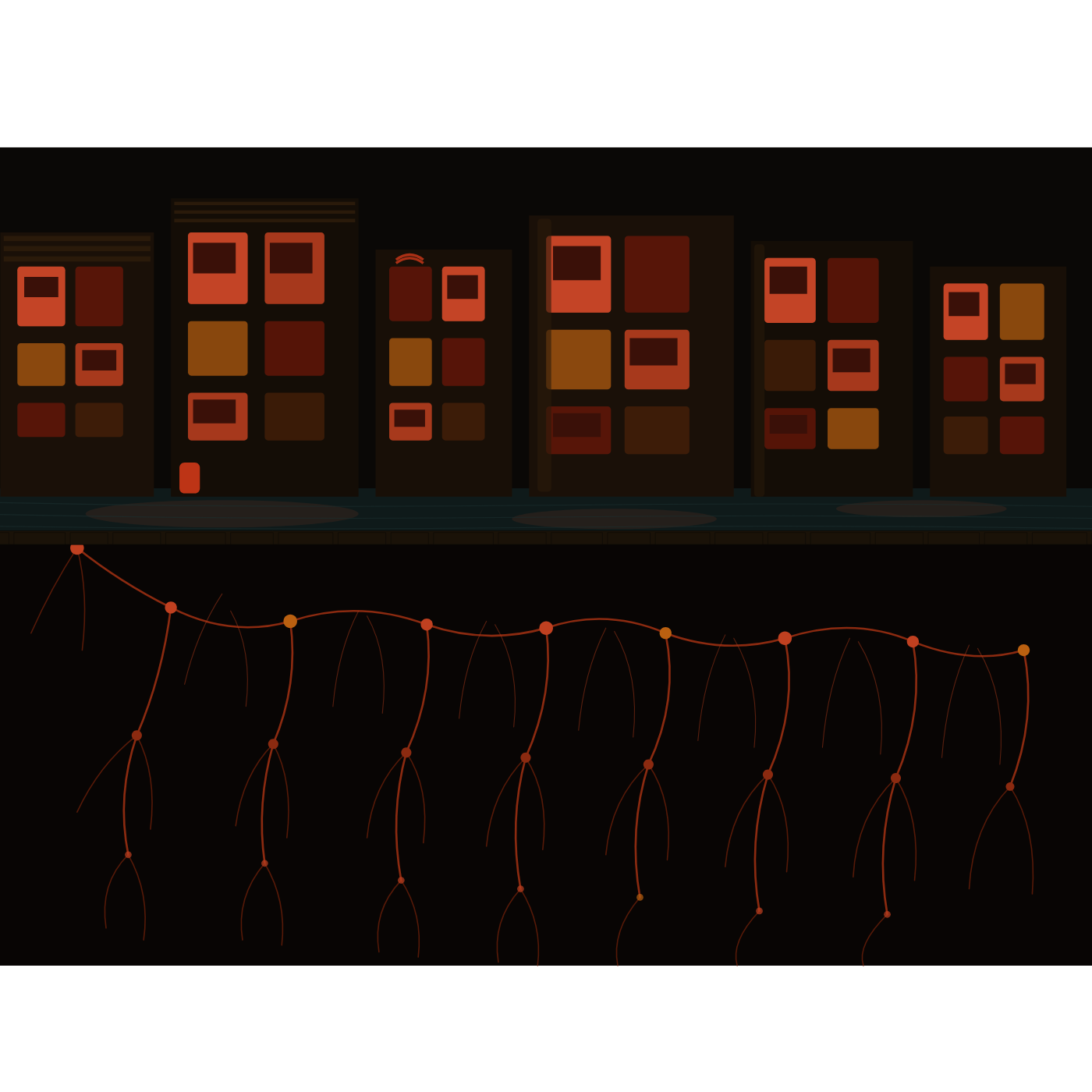
A little later Freek comments that “Amsterdam as a city cannot be understood without the complex mycelial network of clubs, studios and galleries” that make up the city’s nightscape. Suddenly, the talk is illuminating.
The nightclubs, the underground venues, the illegal rave in a warehouse, these are not the trees. They are the mycelium. Invisible, unglamorous, operating in the dark, beneath the surface of the respectable city. And what they do is connect.
Mycelial. The word unlocks everything. It brings to mind what scientists call the “wood wide web”, the fungal system that connects, that lets trees communicate. Discovered by Suzanne Simard’s research in the 1990s it revealed that forests are not collections of competing individuals but cooperative networks.
The drag ball connects the isolated queer teenager to a community. The punk venue connects the working-class kid to an identity. The jazz club connects the immigrant to a cultural tradition. Freek testifies he is living proof: the “kindness and empathy” he encountered in the spaces of Amsterdam’s night changed his life, saved his life.
These observations make one revisit his claims that nightlife is now “tolerated at best”. In other words not tolerated by the city politicians and real estate investors.
“Messy and imperfect friction.” – cities are not supposed to have friction: certainly not the cities made by the modern town planner software.
“Dimly lit music temples.” The word temple suggests the sacre; a space set apart from the lasers of commercial logic, separate to transaction society. Not commercial, but underground; not in the investment prospectus.
All three describe the night that Wallagh seeks to protect. They are phrases of someone who has seen the other side of the night.
Now, for him, the music has stopped. Silence has taken over.
And of course, it would be easy to shrug. This is a talk about the demise of sex workers and punks, not museums and galleries.
But keep returning to those two phrases, ‘nocturnal creatures’ and ‘mycelial network’, and a starker message emerges. Wallagh uses them in his talk to capture underground connections. Yet they lead somewhere further: to a new understanding of what cities actually need to survive.
A new vision of the relationship between ecology and town planning.
Call it the “Silent Night”.
For the language leads us to this insight: that ecological research needs to shape the decisions of our city planners.
Simard’s research showed that when you remove the mycelium, when you sterilise the soil, the trees begin to die. Not immediately. Not visibly. But the network that sustained them is gone. And without the network, the trees cannot survive.
In 1962 Rachel Carson published Silent Spring, the book that first made us recognise that pesticides were destroying not just pests but the entire ecological web that pests inhabited. And ultimately human society. The silence of the birds was caused by the chemical extermination of those unseen, unsightly grubs “nocturnal creatures” that were “tolerated at best”.
Across Europe, in the UK, there is a silence falling over cities now. Silent Nights. The venues are closing. The communities that formed within them are dispersing. The cultural soil that produced fifty years of British music, fashion, art, and identity is being stripped away one planning application at a time.